You don’t need to be 22 and fresh out of school to start your musical journey. Thousands of adults across the globe are discovering the joy of learning instruments through online platforms in 2026, fitting lessons seamlessly between work meetings, family dinners, and weekend commitments. Whether you’ve always dreamed of playing piano, strumming your first guitar chord, or finally understanding music theory, online music lessons for adults have transformed what once seemed impossible into a flexible, achievable reality.
The barriers that stopped previous generations are dissolving. You can now connect with world-class instructors from anywhere, schedule lessons at 6 AM before the kids wake up or 10 PM after they’re in bed, and learn at a pace that respects your busy life. No commuting to studios, no rigid semester schedules, and definitely no judgment about starting later in life.
Here’s what makes this moment different: technology has caught up with intention. High-quality video platforms, screen-sharing capabilities for sheet music, and interactive tools create learning experiences that often surpass traditional in-person settings. You get personalized attention without the overhead, access to specialized teachers you’d never find locally, and the comfort of practicing in your own space.
The truth many adult learners discover is that maturity brings advantages. You have discipline, clearer goals, and patience that younger students often lack. You’re learning because you want to, not because someone signed you up. That intrinsic motivation, combined with the convenience of online education, creates a powerful formula for genuine progress.
The question isn’t whether you’re too old or too busy. It’s whether you’re ready to finally start something you’ve been putting off for years.
Why Adults Are Turning to Online Music Education
The shift toward digital education has reshaped how adults approach learning music, and 2026 has seen this trend accelerate beyond what many predicted. According to online learning trends for 2026 adult enrollment in online skill-based courses continues climbing, with music instruction leading the creative education category. This isn’t a temporary pandemic hangover, it’s a fundamental shift in how grown-ups fit personal growth into modern life.
Adults bring different motivations to music lessons than children do. They’re not being pushed by parents or fulfilling school requirements. Instead, they’re answering internal calls that often get louder with age:
- Stress relief and mental health support during demanding careers
- Checking off bucket list goals before “someday” becomes never
- Career pivots toward music therapy, teaching, or performance work
- Rekindling childhood passions they abandoned years ago
- Building new social connections through shared musical interests
- Cognitive benefits and brain health as they age
Traditional in-person lessons simply don’t mesh with adult realities. The 6 PM Tuesday slot that works this week might clash with a work presentation next month. Commuting thirty minutes each way for a forty-five-minute lesson makes no sense when you’re already stretched thin. Geographic limitations mean you’re stuck with whoever teaches locally, regardless of whether their style or expertise matches your goals.
Online music education eliminates these friction points entirely. A professional in Singapore can study guitar with a Nashville session player. A parent can take voice lessons after kids go to bed. Someone exploring music therapy as a second career can sample lessons from multiple instructors before committing. The format respects adult schedules instead of forcing adults to contort their lives around lesson times.
What’s driving this isn’t just convenience, it’s the realization that the barriers keeping adults from music were logistical, not personal. Remove those barriers, and suddenly learning an instrument at forty, fifty, or seventy becomes not just possible but practical.
The Flexibility Factor: Learning Music on Your Schedule
Fitting Lessons Around Work and Family
You don’t need to block off your entire Saturday afternoon or rearrange childcare to take music lessons anymore. Online platforms let you slot a 30-minute piano session into whatever window your life allows, even if that’s 6 a.m. before the kids wake up or 9 p.m. after they’re finally asleep.
Parents juggling school runs and work deadlines often schedule lessons during naptime or right after dropping the children at school. One violin student I know takes her lesson during her toddler’s mid-morning nap, instrument ready on the dining table. If the baby wakes early, she reschedules with a quick message, no wasted driving time, no guilt about a missed appointment across town.
Professionals with unpredictable schedules find similar freedom. A corporate lawyer books guitar lessons at 7 a.m. twice a week, connecting from his home office before his first meeting. A nurse on rotating shifts takes voice lessons at 10 p.m. on her late-shift weeks, when traditional music schools are locked up for the night. The flexibility works because your instructor can be in a different time zone, teaching during their afternoon while you’re squeezing in practice during your lunch break.
The point is simple: you pick windows that already exist in your routine rather than creating new ones. Early risers claim morning slots. Night owls learn after everyone else is in bed. Parents use those precious quiet moments. Your music education fits the life you already have.
Learning at Your Own Pace Without Pressure
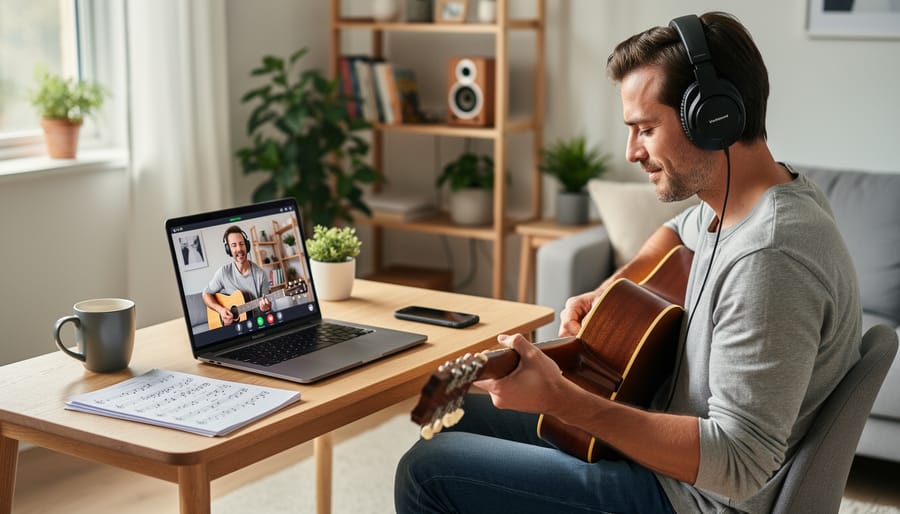
One of the most liberating aspects of online music education is the complete absence of comparison anxiety. You’re not sitting in a group class next to a 22-year-old prodigy or wondering if everyone else is progressing faster. Your instructor focuses entirely on your individual journey, adjusting the curriculum to match how quickly or slowly you need to move through concepts.
Online lessons excel at personalization because instructors can tailor every aspect to your specific learning style. Some adults grasp chord progressions instantly but need extra time on rhythm; others sight-read beautifully but struggle with technique. Your teacher adapts in real-time, spending three weeks on one skill if needed, then accelerating through areas where you’re naturally strong. There’s no predetermined syllabus forcing you forward before you’re ready.
This pressure-free environment makes a tangible difference in how adults learn. Without the silent judgment you might imagine in traditional settings, you’re more willing to ask “basic” questions, make mistakes openly, and actually enjoy the messy middle stages of skill-building. Progress happens when you’re engaged, not stressed, and online platforms create exactly that kind of supportive space.
What Online Music Lessons for Adults Actually Look Like
One-on-One Attention From Anywhere in the World
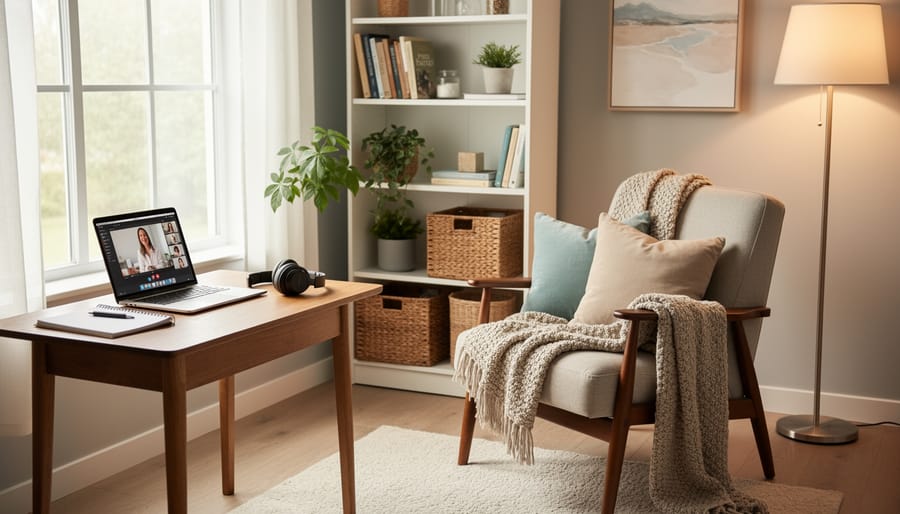
One of the biggest surprises for adults trying online lessons for the first time? Just how personal they feel. There’s no back-of-the-classroom dynamic here. When you’re on a video call with your instructor, you get their full attention for the entire session, just you, your instrument, and a teacher who’s genuinely invested in your progress.
The technology bridges distance remarkably well. Your instructor can see your hand position, hear your tone clearly, and give you real-time feedback just as they would in person. You’ll chat about your goals, troubleshoot challenges together, and celebrate small wins. Many adults find they actually open up more comfortably from home than they would in a studio setting.
Here’s where it gets even better: you’re not limited to whoever teaches within driving distance. With online learning, you can work with a classical piano specialist in London, a jazz guitar instructor in New York, or a vocal coach in Sydney, all from your living room. This global reach means finding someone whose teaching style, expertise, and personality truly click with you.
At Greenwych, this worldwide accessibility is central to what we do. Our students connect with passionate instructors across time zones, building genuine mentoring relationships that transcend geography. The screen doesn’t create distance, it removes it.
Instruments That Work Well for Adult Beginners Online
Not every instrument translates equally well to a screen. If you’re choosing what to learn online, some are simply easier to get started with than others.
**Piano and keyboard** top the list for adult beginners. Your teacher can see your hand position clearly on camera, demonstrate fingering techniques, and you’ll hear exactly what you’re playing through your device. Digital pianos with MIDI connectivity can even share what you’re playing directly into the lesson software, giving your instructor real-time feedback on your accuracy. Plus, the visual layout of keys makes music theory concepts surprisingly intuitive.
**Guitar** works beautifully online once you angle your camera correctly. Instructors can watch your fretting hand, strumming technique, and posture without issue. Acoustic and electric guitars both translate well, and most teachers will help you troubleshoot your camera setup in the first lesson so everything’s visible.
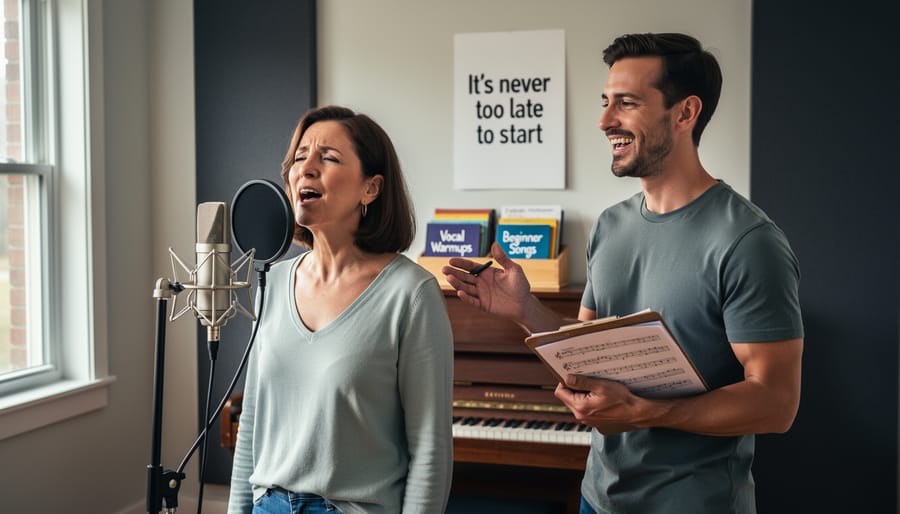
**Voice lessons** might be the most natural fit for online learning. Your teacher can hear your tone, pitch, and technique clearly through a decent microphone. Many vocal coaches prefer online sessions because students feel less self-conscious practicing in their own space, which leads to faster progress.
**Ukulele** is an excellent choice for absolute beginners. It’s portable, affordable, and the smaller fretboard is easier to see on screen than a full-sized guitar.
Less common instruments like violin or drums can work online too, though they may require more specific camera angles and audio setup. Most online music schools offer guidance on equipment setup regardless of what you’re learning, and many provide rental or purchase recommendations if you don’t own an instrument yet.
Overcoming the ‘Too Old to Learn’ Myth
The biggest obstacle standing between many adults and their first music lesson isn’t time or money, it’s the voice in their head saying they’re too old. That voice is lying to you.
Your brain doesn’t stop learning at 25, 30, or 60. Research on adult neuroplasticity shows that our brains remain remarkably adaptable throughout life. While children may absorb certain auditory patterns more quickly, adults bring massive advantages to the learning table: the discipline to practice consistently, the emotional maturity to handle frustration, and the genuine motivation that comes from personal choice rather than parental pressure. When you decide to take online music lessons for adults at 40 or 50, you’re not fighting biology, you’re leveraging decades of life experience that actually makes learning more meaningful.
Adults also excel at connecting concepts logically, understanding theory in ways children simply can’t, and applying problem-solving skills honed in careers and relationships. You know how to manage your time, set realistic goals, and stick with challenges when they matter to you. These aren’t minor perks; they’re game-changers in musical progress.
The students who tell themselves they’ve missed their window often make the fastest breakthroughs once they start. A 52-year-old who finally picks up the piano she always wanted to play practices with an intentionality that a distracted teenager can’t match. A 38-year-old learning guitar between work calls brings focus and commitment to every 20-minute practice session. Their progress may look different from a child prodigy’s path, but it’s no less real and often far more sustainable.
The myth persists because we see child musicians and assume early start equals success. But musical skill isn’t reserved for those who started young, it’s available to anyone willing to begin where they are. Your age isn’t a barrier. It’s context, and often, it’s an asset.
How to Choose the Right Online Music Program for You
Not all online music lessons are created equal, and choosing the right program can make the difference between giving up in frustration and making genuine progress toward your musical goals. The good news is that a bit of informed evaluation upfront helps you find an instructor and platform that truly fit your needs as an adult learner.
Start by looking at the technology platform itself. Does the video quality hold up during a lesson, or does it freeze and lag? Can you easily share screen views of your hands on the keyboard or fretboard? The best programs use reliable, purpose-built systems rather than generic video chat tools. Also consider whether recorded lessons are available for review, being able to watch your instructor’s demonstration again at your own pace is invaluable when you’re learning a new technique.
Instructor qualifications matter, but they extend beyond academic degrees. Yes, look for formal training and teaching experience, but also consider whether the instructor has worked with adult beginners specifically. Teaching adults requires different approaches than teaching children, patience with slower physical adaptation, understanding of time constraints, and the ability to connect musical concepts to adult life experience. Many excellent online programs let you browse instructor profiles to find someone whose background and teaching philosophy resonate with you.
Before committing, ask yourself these critical questions about any provider:
- Do they offer a trial lesson or money-back guarantee so you can test the fit without financial risk?
- Can you schedule lessons at times that actually work for your time zone and routine?
- Is the curriculum customizable to your specific interests, or is it a rigid, one-size-fits-all program?
- How does the instructor handle missed lessons or needed schedule changes?
- Are there opportunities for performance feedback beyond weekly lessons, such as recorded assignment reviews?
Lesson customization is especially important for adults. You’re not learning music to pass an exam, you’re learning because you want to play songs you love, reduce stress, or fulfill a personal dream. The right program adapts to those individual motivations rather than forcing you through a generic method book designed for eight-year-olds.
Pay attention to how responsive the school is during your initial inquiry. If getting answers to basic questions feels like pulling teeth, imagine the frustration when you need to reschedule a lesson or have a technical issue. Schools that prioritize clear communication and flexibility, such as those offering global accessibility with instructors across time zones, demonstrate they understand the realities of adult learners’ lives.
Finally, trust your gut about the personal connection. A thirty-minute trial lesson reveals whether an instructor’s personality and communication style work for you. The best online music program isn’t necessarily the most expensive or the one with the fanciest website, it’s the one where you feel encouraged, understood, and genuinely excited to practice between lessons.
Making Progress When Life Gets in the Way
Life happens. You’ll have weeks where practice feels effortless, and then a project deadline hits, a family member needs care, or you simply run out of steam. This isn’t failure. It’s reality for adult learners, and the key to long-term progress is working with these disruptions rather than letting them derail you completely.
When you can’t find 30 minutes, find five. Short, focused practice sessions are surprisingly effective for adults because your brain continues processing what you’ve learned between sessions. Spend those five minutes on scales, reviewing one tricky passage, or simply running through a warm-up exercise. This maintains muscle memory and keeps you connected to your instrument, even during chaotic periods.
If you’ve taken a break, several weeks or even months, resist the urge to restart from scratch or punish yourself with grueling catch-up sessions. Instead, return at about 70% of where you left off. Play pieces you previously mastered to rebuild confidence, then gradually reintroduce newer material. Your fingers may feel rusty, but the neural pathways you built don’t disappear. They return faster than you think.
Set sustainable expectations from the start. Progress for adults isn’t linear. Some months you’ll leap forward; others, you’ll simply maintain. Both are valuable. Talk openly with your instructor about your current capacity. A good teacher will adjust lesson content and practice goals to match your reality, not an idealized schedule.
The adults who succeed long-term aren’t the ones with the most free time. They’re the ones who accept that imperfect, inconsistent practice still moves you forward. Your musical journey spans years, not weeks. Missing practice today doesn’t erase yesterday’s progress or prevent tomorrow’s breakthrough.
The barriers that once kept adults from learning music, rigid schedules, the need to commute, the pressure to keep pace with younger students, no longer apply. Online music lessons for adults have changed the game entirely. You can learn from world-class instructors without leaving your living room, schedule lessons around your actual life instead of the other way around, and progress at a pace that respects both your goals and your reality.
If you’ve been waiting for the “right time” to start, here’s the truth: that moment is now. Your age isn’t a limitation; it’s actually an advantage. You bring focus, life experience, and genuine motivation that children simply don’t have yet. The discipline you’ve developed in your career translates directly to musical progress when you have the right support system.
Starting is admittedly the hardest part. That first lesson requires courage. But once you pick up an instrument and realize you can actually make music, even in those early, imperfect attempts, something shifts. The excuses fade. The “what ifs” transform into “why didn’t I do this sooner?”
Whether you’re rekindling a childhood passion, checking something off your bucket list, or simply creating space for joy in your busy week, flexible online music lessons make it possible. You don’t need to rearrange your entire life. You just need to take one small step: book that first lesson. Your future self will thank you.