
Electronic instrument repair comes down to three paths: a quick fix you can handle yourself, a professional repair that restores your instrument to working order, or replacement when the cost doesn’t make sense. Most electronic instrument problems fall into predictable categories, from crackling outputs and dead keys to power failures and software glitches, and knowing which issues you can safely tackle at home versus which demand professional expertise will save you time, money, and potential damage to your instrument.
The decision matters because the wrong approach can turn a simple repair into a costly disaster. A loose cable or dirty contact might take you ten minutes to fix with basic tools, while circuit board damage or precision calibration requires specialized equipment and training. For musicians learning and performing online, instrument downtime disrupts practice schedules and performance commitments, making fast, accurate diagnosis essential.
This guide walks you through common electronic instrument failures, helps you assess whether DIY repair makes sense for your situation and skill level, and shows you how to evaluate professional repair services when you need them. You’ll learn to spot the warning signs that separate a home fix from a job that needs professional attention, understand what different repairs typically involve, and make informed choices about repair versus replacement based on your instrument’s value and condition.
Why Electronic Instruments Need Different Care Than Acoustic Ones
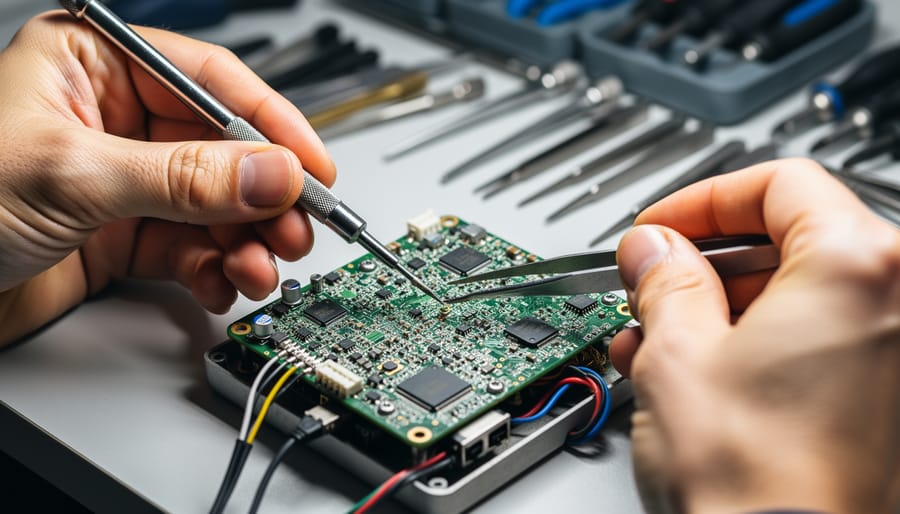
Acoustic instruments speak in vibrations and resonance. A skilled luthier can see a crack in soundboard wood, feel tension in guitar strings, hear the rattle of a loose brace. Electronic instruments operate in a different language altogether, one written in circuit pathways, voltage tolerances, and lines of code.
When your digital piano stops producing sound, the problem isn’t a loose soundboard or worn-out felt hammer. It’s more likely a failed circuit board, corrupted firmware, or broken connection within a maze of electronic components too small to see clearly without magnification. Unlike the relatively forgiving nature of wood and metal in acoustic repairs, electronic components demand precision work in controlled environments. Static electricity from your fingertips can destroy a circuit board worth hundreds of pounds. A misplaced solder joint can create intermittent failures that take hours to diagnose.
The complexity extends beyond physical components. Modern electronic instruments integrate software layers that acoustic instruments never touch. Your keyboard controller might need a firmware update. Your digital mixer could have corrupted presets stored in memory chips. These aren’t problems you can address with woodworking tools or basic mechanical know-how, no matter how confident you are with traditional instrument maintenance.
This doesn’t mean electronic repairs are impossible for dedicated DIYers, but it does require acknowledging that the skillset differs fundamentally. Where acoustic repair rewards patience and understanding of physical materials, electronic repair demands knowledge of electrical theory, component-level diagnostics, and often specialized equipment you won’t find in a standard toolkit. The margin for error shrinks considerably when working with delicate circuitry instead of replaceable strings or adjustable truss rods.
Common Electronic Instrument Problems You’ll Encounter
Simple Connectivity and Cable Issues
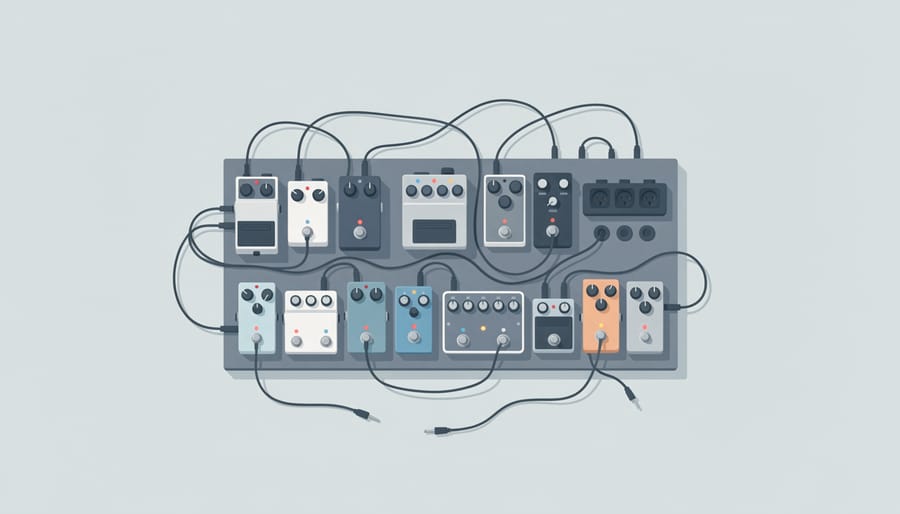
You’re mid-rehearsal when your keyboard starts cutting out. Or your MIDI controller suddenly won’t send signals to your computer. Before you panic and assume the worst, check the obvious culprits: cables and connections. Many apparent disasters trace back to a loose quarter-inch jack, a frayed USB cable, or a dodgy power adaptor that’s been plugged and unplugged a hundred times.
Start with the cables themselves. Wiggle connectors gently while the instrument is on, if the sound flickers in and out, you’ve found your problem. Try a different cable if you have one lying around. Output jacks on instruments can also work loose over time from repeated plugging, and sometimes a bit of contact cleaner on the jack eliminates crackling or intermittent connection. Power supplies are another frequent offender: adaptors fail, wall sockets develop poor contact, and power strips can quietly stop delivering stable current.
The good news? These issues rarely require specialist knowledge to diagnose, and replacement cables or basic cleaning supplies are inexpensive and widely available. Before you book a repair appointment or tear into your instrument’s internals, spend ten minutes systematically checking every connection point. You might solve the problem without any tools beyond a fresh cable.
Internal Component and Circuit Failures
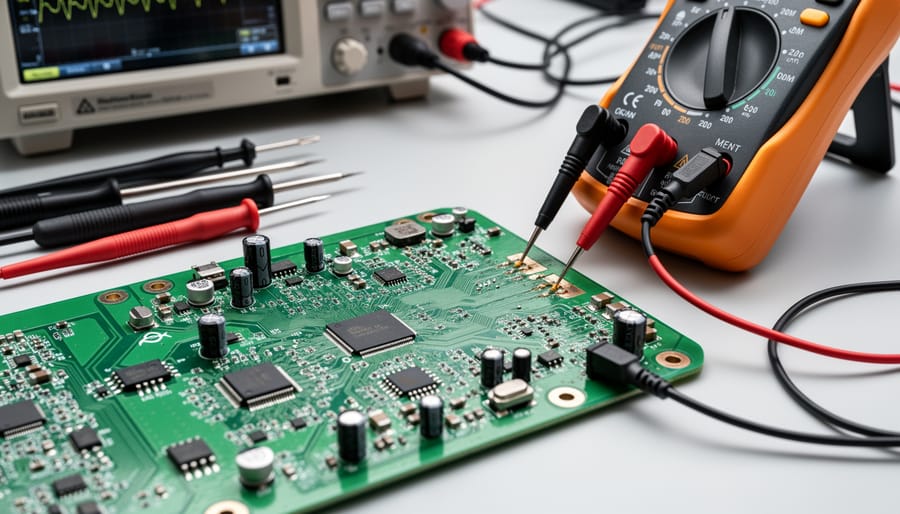
When an electronic instrument stops producing sound or behaves erratically despite checking all the obvious connections, you’re likely dealing with internal component failure. These problems live inside the chassis, where circuit boards, processors, and integrated components work together to create sound.
Failed circuit boards represent some of the trickiest issues. A malfunctioning board might cause intermittent sound dropouts, complete silence, or distorted output that cleaning and cable swaps won’t fix. Circuit board problems can stem from failed capacitors, damaged solder joints, or chips that have reached end-of-life. Unlike a loose cable, you can’t see these failures without opening the instrument and knowing what to look for.
Malfunctioning keys, pads, or controls often point to failed sensors or contact strips beneath the playing surface. On electronic keyboards, a single dead key might indicate a broken contact, while multiple non-responsive keys could suggest a failed rubber contact strip or sensor board. Drum pad controllers face similar issues when pads stop registering hits or trigger ghost notes.
Software glitches blur the line between hardware and firmware problems. An instrument might freeze during operation, fail to save settings, or behave unpredictably after a power interruption. Sometimes a firmware update resolves the issue. Other times, corrupted memory chips or failed processors require hardware replacement.
These internal failures demand proper diagnosis before attempting any fix. Opening an electronic instrument without understanding what you’re looking for can transform a repairable problem into irreversible damage, making professional assessment worthwhile when symptoms point inward rather than to external connections.
What You Can Safely Handle Yourself (And What You Shouldn’t)
DIY-Friendly Repairs for the Confident Tinkerer
If you’re comfortable with basic electronics and willing to learn, several electronic instrument repairs are genuinely within reach. Replacing faulty instrument cables is perhaps the most straightforward: if you hear crackling or intermittent signal, swapping the cable costs little and requires no technical skill beyond plugging in the replacement. Similarly, cleaning oxidized contact points on jacks and switches often resolves issues that seem more serious, a cotton swab dipped in contact cleaner can restore a non-responsive button or crackly knob.
Tightening loose output jacks is another approachable task. Many jacks simply work loose over time from repeated plugging and unplugging. If your connection feels wobbly, opening the instrument’s panel (after unplugging and checking any warranty implications) might reveal a nut that needs tightening or a mount that’s come loose. Basic soldering skills expand your options further: reattaching a wire that’s come loose from a jack or switch is a common repair that experienced hobbyists can handle with modest equipment.
That said, know your limits. If you’re uncertain about a repair, stopping is wiser than guessing. Voltage-carrying components, delicate circuit boards, and anything involving firmware updates can quickly escalate from DIY project to expensive mistake. Start with simple fixes, use reliable guides or tutorials specific to your instrument model, and approach each repair as a learning opportunity rather than a test of pride.
When Professional Expertise Becomes Essential
Even if you’re comfortable with basic repairs, some situations demand professional expertise. Recognizing these scenarios protects your instrument and saves money in the long run.
Warranty coverage is the clearest indicator. Opening an electronic instrument yourself typically voids manufacturer warranties, and modern instruments often include service plans covering specific repairs for a defined period. If your instrument is still under warranty, professional service through authorized channels preserves that protection and ensures you’re not paying out-of-pocket for covered issues.
Complex circuitry and digital components present genuine safety and skill barriers. Circuit board diagnosis requires specialized testing equipment and knowledge of electronics that goes well beyond changing cables. Software-integrated instruments may need firmware updates or specialized programming alongside physical repairs. Attempting these repairs without proper training can transform a fixable problem into a completely ruined instrument.
High-value instruments warrant professional attention regardless of the apparent simplicity of the issue. The stakes are different when you’re working on an instrument that represents a significant investment in your musical career. Professionals carry insurance, work with proper tools, and understand the specific architecture of different makes and models.
Safety concerns, particularly around power supplies, capacitors, and high-voltage components, make certain repairs genuinely dangerous for untrained individuals. If the problem involves the power section or you’re unsure what you’re looking at inside the housing, professional expertise isn’t just recommended, it’s essential for your safety.
How to Evaluate Professional Repair Services
Finding the right repair technician matters as much as deciding to seek professional help in the first place. Start by asking fellow musicians in your local community or online forums for recommendations. Music teachers, instrument retailers, and music schools often maintain relationships with reliable repair services and can point you toward technicians who specialize in electronic instruments rather than general electronics repair.
When you’ve identified potential services, ask about their specific experience with your instrument type. A technician skilled in synthesizer repair might not be the best choice for your digital piano, and vice versa. Request information about their diagnostic process, reputable services will explain how they assess issues before committing to repairs, and they’ll provide estimates rather than starting work immediately.
Turnaround time varies widely depending on the complexity of your issue and parts availability. Some repairs take days, others weeks, particularly if components must be ordered from manufacturers. Ask upfront about timeframes and whether loaner instruments are available if you need one for upcoming performances or practice sessions.
Geography once limited your repair options to whoever operated nearby, but that’s changed. Online consultations now let you connect with specialists anywhere, and many services handle mail-in repairs for instruments that can be safely shipped. This expands your choices considerably, especially if you live in areas with limited local repair infrastructure.
For musicians studying remotely or traveling frequently, this flexibility proves particularly valuable. Services aligned with online music education understand the realities of distance learning and can coordinate repairs around your lesson schedule. The goal is keeping you playing with minimal disruption, whether you’re across town or across continents.
Before committing, verify that any warranty on your instrument won’t be voided by outside repair work. Some manufacturers require authorized service centers for warranty coverage. A good technician will ask about warranty status and help you navigate those considerations rather than simply accepting the job.
Making the Repair vs. Replace Decision
Sometimes the toughest decision isn’t how to fix your instrument, but whether fixing it makes sense at all. There’s no magic formula here, the right choice depends on your specific situation, and honest answers to a few key questions will guide you better than any universal rule.
Start with the practical economics. Research what your instrument would sell for in working condition today, not what you paid originally. If you’re looking at a complicated repair, check what a comparable replacement would cost. When those numbers get close, replacement usually wins on pure logic, you’ll have a fully functional instrument with no immediate concerns rather than an aging one with one fresh repair but potentially other worn components.
Consider parts availability too. Older electronic instruments sometimes become impossible to repair properly because manufacturers discontinue specific circuit boards or proprietary components. A technician might tell you straight away whether they can source what’s needed or if you’re facing a dead end.
The complexity of the repair matters as much as the cost. A straightforward fix that gets you back to playing quickly feels different from a lengthy, uncertain repair process that might leave you without your instrument for weeks.
But here’s where pure economics fall short: your history with the instrument counts. That keyboard you learned on, the synth you wrote your best songs with, these aren’t just circuits and keys. If an instrument has genuine sentimental value or unique characteristics you won’t find in a replacement, paying for repair can absolutely make sense even when the spreadsheet says otherwise.
Be honest with yourself about your attachment, though. “I’ve had it for years” is different from “I genuinely can’t imagine creating music on anything else.” The first might be habit; the second might justify repair even when replacement looks cheaper on paper.
Whether you tackle the repair yourself or hand your instrument to a trusted professional, what matters most is making the choice that works for your situation. There’s no single right answer, only the one that fits your skill level, your instrument’s needs, and the resources available to you. Every repair you navigate, whether successful or frustrating, teaches you something valuable about your instrument and deepens your relationship with it.
At Greenwych, we understand that musicians face these challenges everywhere, which is why we’ve built a truly global support network. Our online platform connects you with expert guidance wherever you are, ensuring you’re never alone when technical issues interrupt your musical journey. We’re here to help you keep playing.