Finding the right tool rental company nearby depends on what you’re looking for: local storefronts offer hands-on selection and same-day pickup, online services provide nationwide delivery and broader inventories, school-affiliated programs give students discounted access, and specialty shops focus on niche or professional-grade equipment. For aspiring musicians, the question isn’t just about proximity but flexibility, affordability, and whether you can access quality instruments without a long-term commitment or heavy upfront cost.
If you’re a parent shopping for your child’s first violin, a working professional exploring guitar lessons between meetings, or an international student settling into a new city, renting makes sense. You avoid the risk of buying an instrument that might sit unused in six months. You get to test different brands and models before investing. And if life gets busy (as it does for busy adults learning music), you’re not locked into ownership.
The challenge is knowing where to look. Big-box hardware stores sometimes carry musical gear but rarely specialize in it. Local music shops might have limited stock or inconvenient hours. Online platforms ship globally but lack the personal touch of trying before you rent. School programs are affordable but often restrict access to enrolled students.
This guide ranks the best instrument rental options for 2026, weighing convenience, cost, selection, and accessibility. Whether you need a clarinet for a semester or a keyboard for years of online lessons, you’ll find a service that fits your schedule, budget, and goals.
How We Ranked These Instrument Rental Services
We built this ranking to cut through the noise and help you find an instrument rental service that actually works for your life. Whether you’re a parent hunting for a student violin, an adult learner curious about saxophone, or a busy professional who needs flexibility, we evaluated each option against criteria that matter most to real musicians.
Here’s what we looked at:
- Instrument quality and variety, Are the instruments well-maintained, and is there a range of beginner to professional models across different instrument families?
- Rental terms and flexibility, Can you rent month-to-month, or are you locked into long contracts? Are there rent-to-own options?
- Pricing transparency, Are costs clearly stated upfront, or are there hidden fees lurking in the fine print?
- Maintenance and repair support, What happens if a string breaks or a valve sticks? Is repair included, or are you on your own?
- Accessibility, Can you pick up locally, or does the service ship to your door? How wide is the coverage area?
- Customer service, Is help available when you need it, and do they actually understand musicians’ needs?
- Suitability for different skill levels, Does the service cater to beginners, advancing students, or professionals seeking specific instruments?
This isn’t a generic roundup. Each service earned its spot by excelling in at least a few of these areas, and we’ve been honest about trade-offs so you can match your priorities to the right provider.

1. Greenwych Instrument Rentals, Flexible, Global, and Education-Focused
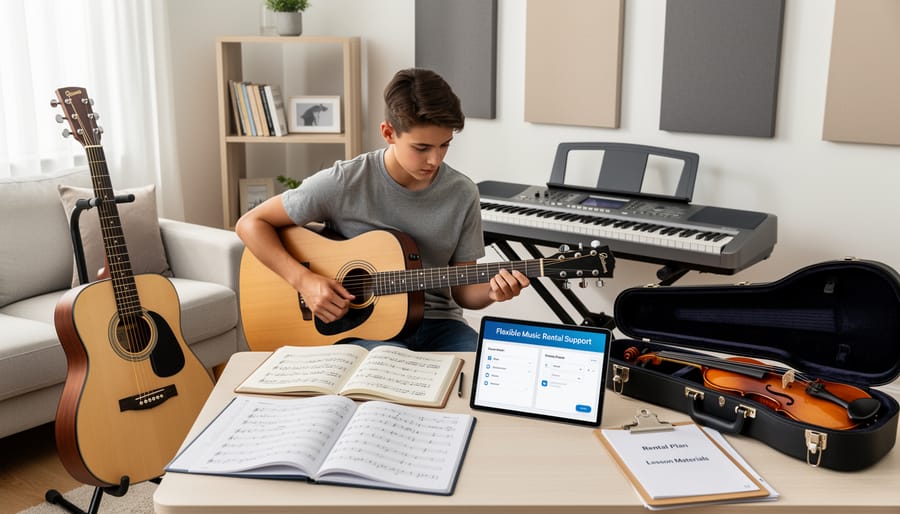
Greenwych Instrument Rentals stands out as our top recommendation because it solves the biggest challenge facing modern musicians: how to access quality instruments without the hassle of traditional rental logistics. Whether you’re a parent juggling work and kids’ activities, an adult learner squeezing practice into lunch breaks, or an international student far from home, Greenwych brings instruments directly to your door anywhere in the world.
What sets Greenwych apart is its seamless integration with online music education. When you rent through Greenwych, you’re not just getting an instrument, you’re gaining access to a complete learning ecosystem. The rental service connects naturally with virtual lessons, practice resources, and ongoing support from experienced instructors who understand your goals. This makes it especially valuable for busy professionals who need flexibility and students who benefit from coordinated instruction and equipment.
The instrument catalog covers everything from beginner violins and cellos to intermediate brass, woodwinds, and full percussion setups. Each rental includes quality accessories like cases, bows, reeds, and mouthpieces, so you have everything needed to start playing immediately. Rental terms are designed around real learning timelines, with month-to-month flexibility that lets you extend or return based on your progress, not arbitrary contract dates.
Maintenance and repair services are built into the experience. If something breaks or needs adjustment, Greenwych handles it without surprise fees or complicated claims processes. This removes a major anxiety point for parents and new musicians who worry about damage costs.
For families managing multiple learners or professionals balancing demanding careers with musical goals, Greenwych eliminates the friction between wanting to play and actually getting started. The combination of convenience, quality, and educational support makes it the smartest choice for anyone serious about learning music in 2026.
2. Local Music Store Rentals, Personal Service and Immediate Access
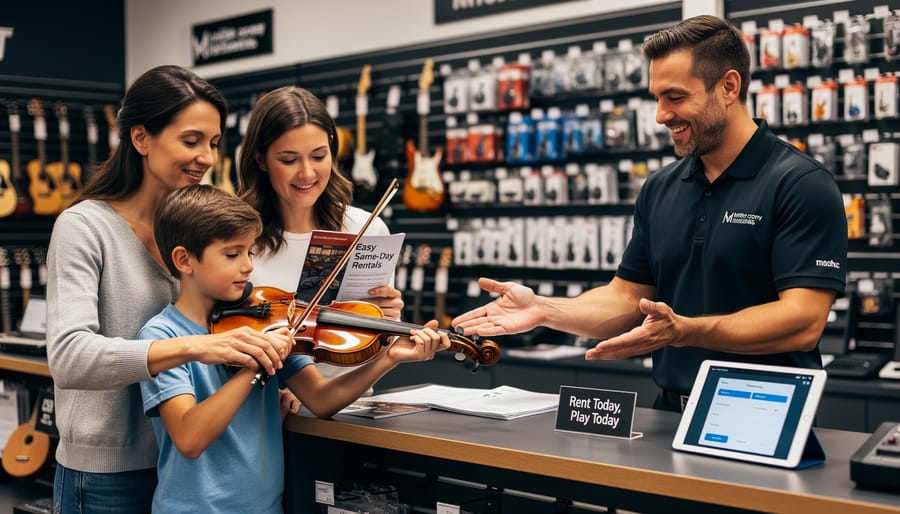
Local music stores remain a solid choice for instrument rentals, especially if you value personal interaction and want to try before you commit. Walking into a shop lets you test different models, compare weights and sounds, and get immediate feedback from staff who know their inventory. That hands-on experience is invaluable when you’re choosing between a trumpet with a brighter tone or a clarinet with a warmer response, details you can’t assess from photos alone.
The biggest advantage is speed. You can walk out with your instrument the same day, no waiting for shipping or coordinating delivery windows. If you’re a parent whose child just joined the school band and rehearsals start next week, that immediacy solves a real problem. Staff can also adjust straps, recommend mouthpieces, and troubleshoot basic setup questions on the spot, which is especially helpful for beginners who need a little extra guidance. Plus, you’re supporting a local business that contributes to your community’s musical culture.
However, local stores often carry smaller selections than online platforms or national chains, and monthly rates can run higher due to overhead costs. If you need a specific model or a less common instrument, you may not find it in stock. Inventory tends to favor standard student instruments, violins, flutes, trumpets, rather than specialty or professional-grade gear.
To find a reputable local store, ask for recommendations from music teachers, read online reviews, and visit in person to assess cleanliness, instrument condition, and staff knowledge. A good shop will explain rental terms clearly, offer maintenance support, and provide flexible agreements. For more detailed advice on evaluating options, check out our student rental guide to compare what different rental models offer.
3. School-Affiliated Rental Programs, Budget-Friendly for Students
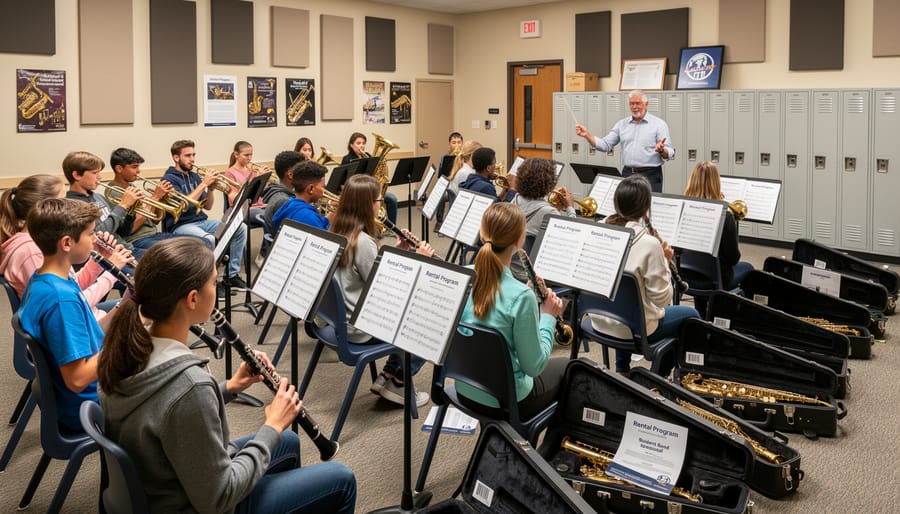
If you’re a parent or student enrolled in a school music program, you might already have access to one of the most affordable rental options available. Many middle schools, high schools, and some elementary schools partner directly with instrument rental companies to offer subsidized or discounted rentals for students in band, orchestra, or choir classes.
These school-affiliated programs work by negotiating bulk pricing with rental providers, then passing those savings on to families. Monthly fees often run 30-50% lower than standard retail rentals, sometimes as little as fifteen to twenty-five dollars per month for common instruments like clarinets, trumpets, or violins. The school music director typically handles the paperwork, making enrollment straightforward, often just a form sent home during the first week of classes.
The convenience factor is hard to beat. Instruments are usually delivered right to the school or distributed during class time, so there’s no extra trip to a music store. Repairs and maintenance often happen on-site when the rental company’s technician visits, and everything aligns perfectly with your curriculum. Your child gets exactly what their teacher recommends, sized appropriately for their age and skill level.
The trade-offs? Instrument selection is generally limited to what the program needs, standard band and orchestra instruments. If your child wants to explore something outside the curriculum, like ukulele or electric bass, you’ll need to look elsewhere. Additionally, these rentals typically run on a school-year schedule. Summer months may require separate arrangements or returning the instrument until fall, which can disrupt practice routines for dedicated students.
Still, for families just starting out in school music programs, these partnerships offer an accessible, hassle-free entry point to instrumental learning.
4. National Rental Chains, Wide Selection and Standardized Terms
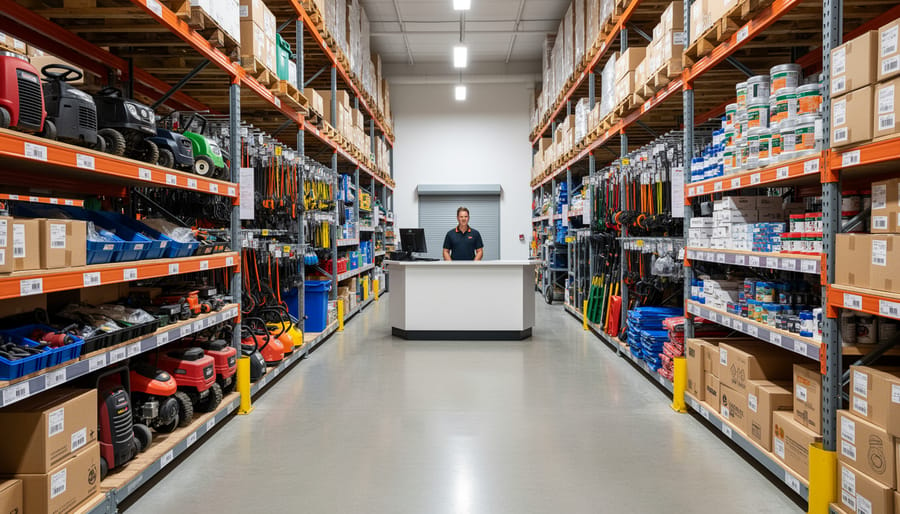
National rental chains bring the advantage of scale to instrument rentals. These companies operate multiple locations across the country, which means you’ll likely find one within driving distance, and you can often transfer your rental if you move cities mid-contract.
The biggest draw is their extensive catalogs. Whether you need a student clarinet, an intermediate trumpet, or a full-size cello, national chains typically stock dozens of models across various quality levels. Their buying power translates to well-maintained instruments from reputable manufacturers, and they replace inventory regularly to keep everything in good condition.
Standardized rental agreements make the process straightforward. You’ll know exactly what you’re paying each month, what’s covered under maintenance, and how rent-to-own programs work. Most chains include free repairs, adjustments, and replacements if your instrument develops problems through normal use. This takes the guesswork out of upkeep, which is particularly valuable for parents or beginners who aren’t yet confident spotting instrument issues.
Rent-to-own options are another strength. Monthly payments typically apply toward the purchase price, so if your child sticks with violin lessons or you decide to commit to learning saxophone, you’re building equity rather than just paying for temporary access. The timelines vary, but many programs let you own the instrument outright after 12 to 24 months of payments.
The trade-off is a more transactional experience. You won’t get the personalized guidance a local shop owner might offer when selecting an instrument, and staff expertise can vary by location. Still, if you value reliability, convenience, and a no-surprises rental structure, national chains deliver consistent quality across the board.
5. Online-Only Rental Platforms, Convenience Meets Variety
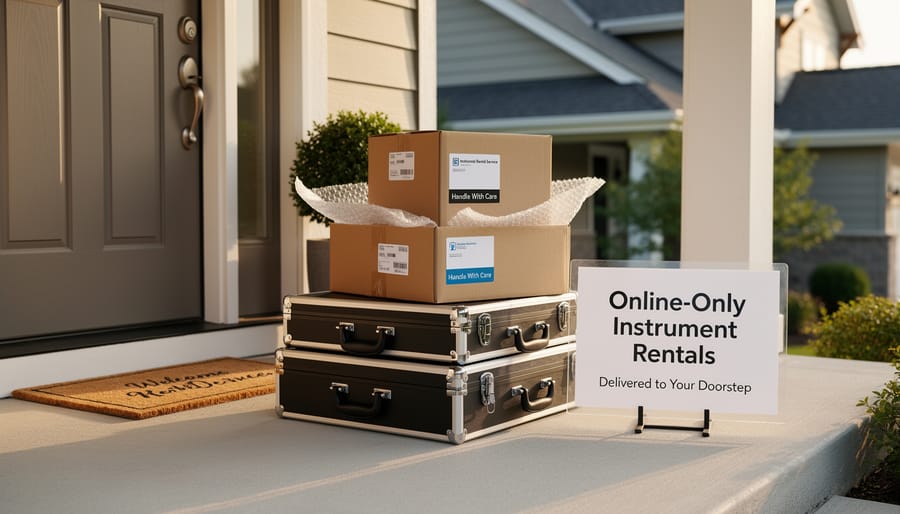
If you’re comfortable shopping online and want maximum variety, dedicated online rental platforms offer an impressive alternative to local stores. These services maintain extensive digital catalogs, often featuring dozens of instrument models across strings, brass, woodwinds, and percussion, and ship directly to your door, wherever you live.
The convenience is hard to beat. Browse instruments at midnight in your pajamas, compare specs and reviews side by side, and have everything delivered within days. Many platforms also offer competitive monthly rates since they operate without the overhead of physical storefronts. You’ll often find rent-to-own options, maintenance guarantees, and straightforward online account management that lets you extend rentals or swap instruments with a few clicks.
The trade-off? You can’t physically試琴 (try the instrument) before committing. Photos and descriptions help, but there’s no substitute for holding a violin or testing a clarinet’s response in person. Shipping delays can also happen, especially during peak school season or if you’re in a remote area. Budget a week or two for delivery rather than expecting same-day access.
When choosing an online platform, prioritize reputation. Look for transparent pricing with no hidden fees, clear maintenance and damage policies, and responsive customer support, ideally with phone and email options. Read recent reviews to gauge instrument quality and shipping reliability. Check return policies carefully; the best platforms offer trial periods or hassle-free exchanges if the instrument doesn’t meet expectations.
For musicians who value selection and convenience over immediate gratification, online-only rentals open up possibilities that local inventory simply can’t match.
6. Specialty Instrument Rental Services, For Rare and Vintage Instruments
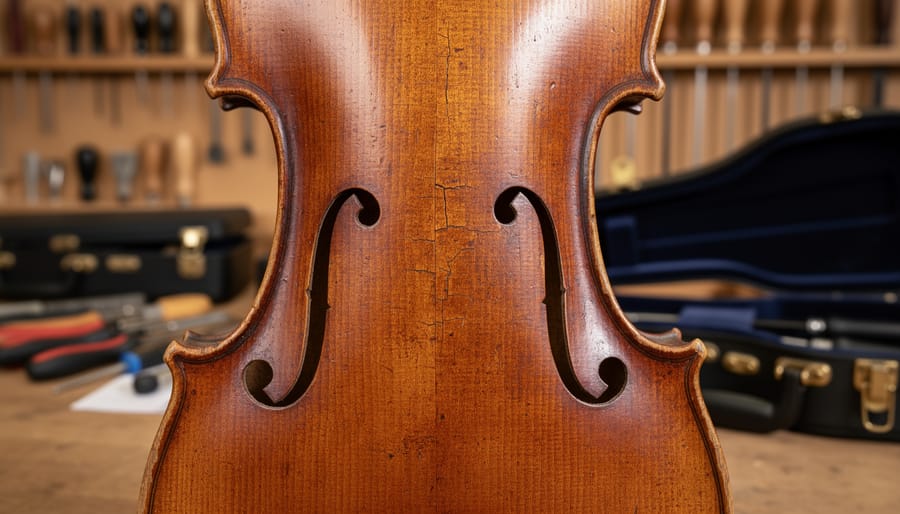
For musicians venturing beyond standard repertoire, specialty rental services fill a crucial niche. These companies focus exclusively on rare, professional-grade, or historically accurate instruments, think baroque oboes, vintage Selmer saxophones, natural horns, or hand-crafted period viols. If you’re a music major preparing a doctoral recital, a performer commissioned for a historically informed performance, or an advanced student exploring specialized repertoire, these services provide access to instruments that most shops simply don’t stock.
The trade-off is cost. Monthly rates for rare or vintage instruments can run two to five times higher than standard rentals, and you’ll typically encounter stricter care requirements. Damage deposits are substantial, and you may need specialized insurance coverage. Many specialty providers require proof of experience, a teacher’s reference, performance resume, or music school enrollment, to ensure their valuable instruments go to capable hands.
Maintenance expectations are also elevated. You’re responsible for proper storage, climate control, and sometimes specific cleaning protocols. Before committing, clarify whether the rental covers routine adjustments or if you’ll need to weigh repair vs DIY for minor issues. Unlike mass-market rentals, these instruments often come with detailed care manuals and direct contact with the owner or curator.
Pricing structures vary. Some specialists offer monthly vs rent-to-own arrangements, while others prefer short-term performance rentals or semester-long agreements. Despite the premium, specialty rentals let you perform historically appropriate repertoire authentically or explore professional-grade equipment before making a major purchase, opportunities that justify the investment for serious musicians.
7. Peer-to-Peer Rental Marketplaces, Affordable and Community-Driven
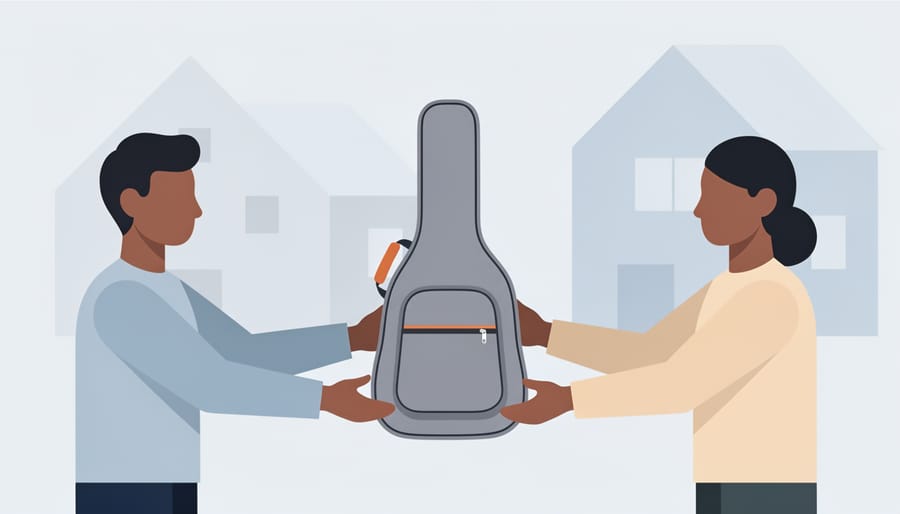
Peer-to-peer rental marketplaces have emerged as an affordable, community-driven alternative for musicians looking to rent instruments directly from other individuals. These platforms connect instrument owners with renters, often at prices significantly lower than traditional rental companies. You’ll find everything from student violins to vintage saxophones listed by local musicians, music teachers, or families whose kids have outgrown their instruments. The variety can be impressive, and the personal stories behind each listing add a human touch you won’t get from corporate catalogs.
The biggest draw is cost. Without the overhead of a retail operation, peer-to-peer rentals can be 30 to 50 percent cheaper than commercial options. You might also discover unique instruments that aren’t available through standard rental channels, making these platforms appealing for musicians seeking something specific or unconventional.
However, quality and reliability vary widely. Unlike established rental companies that inspect and maintain their inventory, peer-to-peer instruments come as-is from individual owners. There’s no guarantee of professional servicing, and some listings may have undisclosed wear or mechanical issues. Customer support is minimal, warranties are rare, and you’re essentially on your own if problems arise after the rental begins.
If you decide to explore peer-to-peer rentals, treat it like any private transaction. Meet in a safe public location if picking up locally, inspect the instrument thoroughly before accepting it, and document its condition with photos. Read reviews of both the platform and the individual renter carefully. For beginners or parents helping students choose a band rental the savings may not outweigh the risks of inconsistent quality and limited recourse if something goes wrong.
What to Look for When Renting an Instrument
Choosing the right rental service is easier when you know what matters most. Here’s a quick checklist of factors to evaluate before you sign any agreement:
- Rental duration options, can you rent month-to-month, or are you locked into a full school year?
- Pricing structure, is it straight monthly rental, or does it offer a rent-to-own path?
- Maintenance and repair coverage, who handles fixes, and are they included or extra?
- Insurance and damage protection, what happens if something breaks, and is coverage mandatory?
- Instrument condition, will you receive a quality, playable instrument or a heavily worn one?
- Return and exchange policies, can you swap for a different size or instrument if needed?
Start by asking about flexibility. If you’re not sure your child will stick with clarinet past the first semester, a month-to-month rental gives you an easy out. Rent-to-own programs can make sense if you’re confident about long-term commitment, since your payments chip away at the purchase price.
Check what’s covered in the rental fee. Good companies include routine maintenance and repairs at no extra charge, which saves you hassle and money down the line. Ask specifically about dent repair for brass, pad replacement for woodwinds, and bow rehairs for strings.
Insurance is worth the extra few dollars a month if you’ve got young kids or you’re traveling frequently with the instrument. Most policies cover accidental damage and theft, giving you peace of mind.
Finally, inspect the instrument before you take it home or when it arrives. It should be clean, fully functional, and appropriate for your skill level, not a beat-up loaner that makes learning harder than it needs to be.
Common Questions About Instrument Rentals
How much does it cost to rent an instrument?
Monthly rental rates typically range from $20 to $60 for beginner instruments like violins, flutes, or trumpets, while larger or more specialized instruments can cost $75 to $150 per month. Most services offer discounted rates for longer commitments and may include maintenance, insurance, and accessories in the price.
Can I rent an instrument for just a few months?
Yes, most rental companies offer flexible terms starting from one month, though many encourage three- to six-month minimum commitments. Short-term rentals are perfect if you’re testing the waters or need an instrument for a specific event or school semester.
What happens if the instrument gets damaged?
Reputable rental services include damage protection or optional insurance that covers normal wear and tear, minor repairs, and sometimes even accidental damage. You’ll typically need to report issues promptly and return the instrument for professional repair rather than attempting fixes yourself.
Is renting better than buying for beginners?
Renting is usually the smarter choice when you’re just starting out because it eliminates the risk of investing hundreds or thousands in an instrument you might not stick with. It also gives you time to develop your preferences and upgrade to a better-quality instrument once you’re committed.
Another common question centers on whether your rental payments build toward ownership. Many companies offer rent-to-own programs where a portion of your monthly payments applies to the purchase price if you decide to keep the instrument. This arrangement gives you the best of both worlds: flexibility to return the instrument if music isn’t your thing, and equity building if you fall in love with playing. Just make sure to clarify the terms upfront, as some services apply 50 to 100 percent of payments toward purchase, while others may cap the credit after a certain period. Understanding these details helps you choose a rental plan that matches both your budget and your long-term musical goals.
Finding the right instrument rental service shouldn’t hold you back from making music. Whether you choose Greenwych’s education-focused platform for its global reach and learning integration, prefer the personal touch of a local store, or opt for a school-affiliated program that fits your budget, what matters most is getting a quality instrument in your hands. Take time to compare your options, read the terms carefully, and don’t hesitate to ask questions about maintenance, flexibility, and support. The perfect rental service is one that removes barriers rather than creates them. Your musical journey is waiting, and with so many accessible, affordable rental paths available, there’s never been a better time to start playing. Pick up that instrument and let the music begin.